In today's rapidly evolving job market, career guidance has become more crucial than ever. A recent report from The Business Report Company indicates that the career education counseling market is projected to grow from $2.66 billion in 2024 to $2.86 billion in 2025, reflecting a compound annual growth rate (CAGR) of 7.5%.
While traditional career coaching has been the go-to solution for decades, the emergence of AI-powered job hunt agents is revolutionizing how people navigate their career paths. As job seekers increasingly turn to technology for support, research from FutureLearn reveals that 59% of HR professionals believe AI can assist individuals in finding their dream jobs. This trend highlights a shift toward more accessible and affordable career support options, making AI agents an attractive alternative for many who may not have the means to access traditional coaching services.
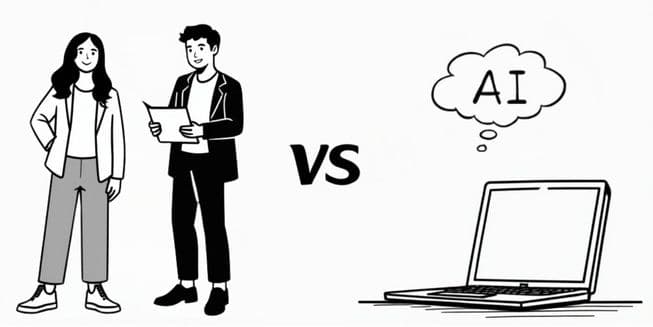
What are AI job hunt agents and human career coaches?
AI job hunt agents are advanced software systems driven by AI that automatically search for job opportunities, customize applications, and even prepare you for interviews.These systems can assess individual profiles and provide personalized career recommendations. On the other hand, human career coaches are experienced professionals who offer one-on-one guidance, drawing from their expertise and interpersonal skills to help individuals.
Weighing the Pros and Cons
1. Availability and Accessibility
AI career agents are always on duty and ready to assist job seekers 24/7. Imagine having access to instant guidance and responses whenever you need them—no more waiting for an appointment! These smart systems provide immediate support in your job search, making it easier to grasp the opportunities as they arise.
In contrast, traditional career coaches work within specific time slots, which can create scheduling challenges. While users can be more focused during the sessions, it can also lead to delays when they need help the most. If a job opportunity pops up suddenly, waiting for your coach’s availability might mean missing out.
2. Personalization and Data Processing
Modern AI agents are capable of searching through vast amounts of data from various sources. They can generate tailored job application materials including CV, cover letter, etc., as well as analyze job market trends and skill requirements for interview prep. What’s more, these AI systems continuously learn from user interactions, refining their suggestions to offer tailored support that evolves with each individual’s needs.
On the other hand, human coaches bring invaluable personal experience and intuition to the table. They are good at understanding the complexity of a job seeker’s situation, providing empathetic guidance that resonates on a personal level. However, their capacity to process data is limited, meaning that they cannot match the scale at which AI identifies patterns across countless successful career transitions.
3. Emotional support
Advanced AI systems now recognize emotional cues in text and respond appropriately. This allows them to be objective and deliver unbiased feedback that isn't swayed by personal preferences.
From the human coach's perspective, the ability to build trust is a significant advantage. Human coaches foster connections through shared experiences and emotional support. A good human coach can inspire confidence and provide invaluable encouragement. However, there are situations where coaches give overly harsh feedback, which may lower job seeker’s self-esteem.
4. Cost-Effectiveness
AI career guidance platforms typically offer subscription-based or pay-as-you-go models at a fraction of the cost of human coaching. Take FirstResume as an example, by paying $20.99 per month, users gain access to all features and products. This enables career guidance to be accessible to a broader audience, including fresh graduates and young professionals on tight budgets.
On the other hand, traditional career coaching involves significant costs, often ranging from $100-$150 per session. This high cost can limit access to quality career guidance, making it a luxury rather than a necessity for many job seekers.
Conclusion
In essence, both AI job hunt agents and human coaches offer unique advantages. AI agents provide 24/7 availability, extensive data processing capabilities, and cost-effective solutions, making them an attractive option for many job seekers. In contrast, human coaches are good at building trust and offering empathetic support, but can be limited by availability and higher costs.
For anyone looking for a comprehensive and affordable job hunt solution, FirstResume is the perfect choice. This AI job hunt agent automates the job search process, customizing CVs, cover letters, application emails, and even preparing you for interviews, empowering you to navigate your career path with confidence.