Career Tips
How to win your job interview in the first 5 minutes
The first five minutes of a job interview are critical, setting the stage for the entire conversation before your skills or experience are even discussed.

The first 5 minutes of your job interview are a different game (Here’s how to win it)
You've applied for a dream job, You've practiced your answers, You're feeling confident.You walk into the interview room, or you log into the video call. And in the first five minutes, a decision is already starting to form in the interviewer's mind.
It’s not about your skills yet. It's not about your experience, your projects, or your past accomplishments. It’s about something far more basic, and yet, completely critical.
An interview is not just a conversation; it’s a performance. And the first five minutes are your opening act. If you stumble here, it's incredibly hard to recover. But if you nail it, you set yourself up for success for the rest of the interview.
Don't let these moments slip away. Here’s what hiring managers are really looking for in those first five minutes, and how you can use it to your advantage.
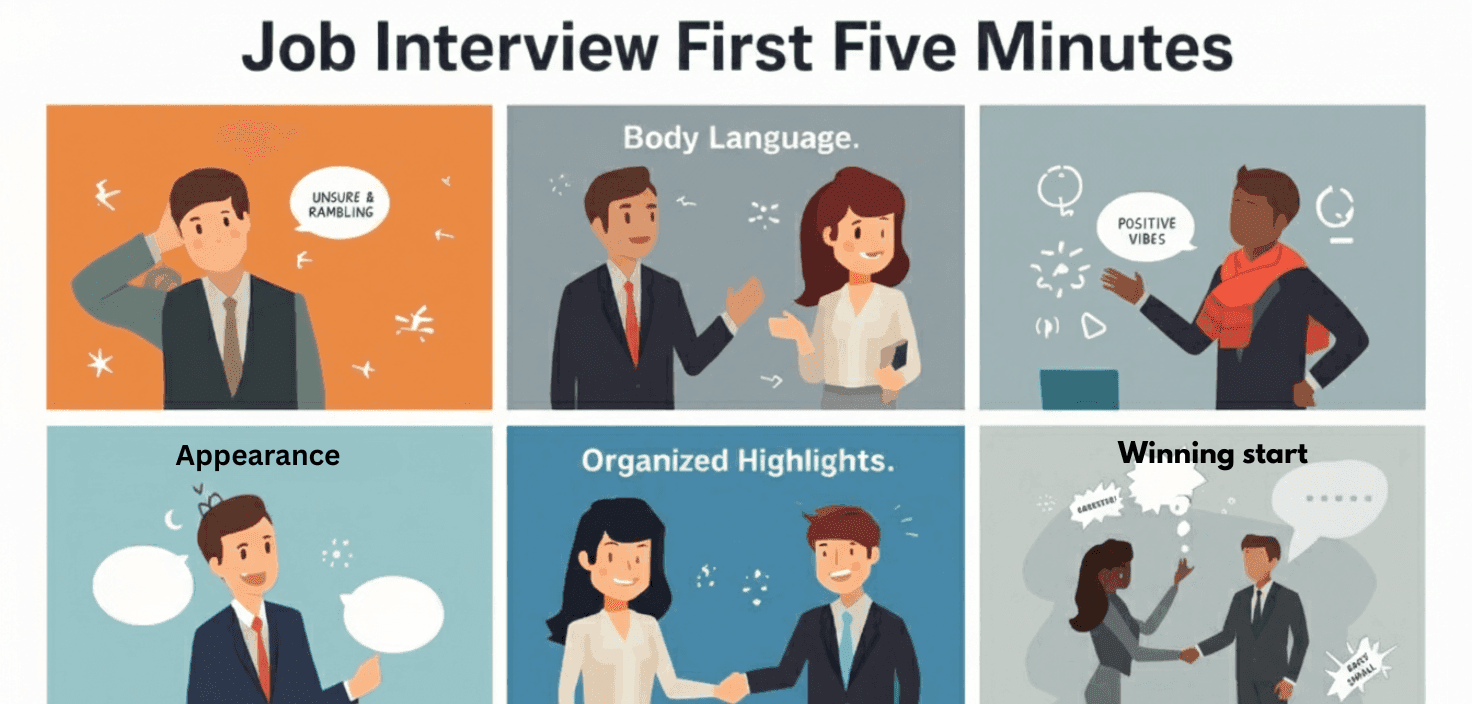
1. Your body language and confidence
Long before you say a single word, you're already communicating. Your body language tells a story. When a hiring manager greets you, they are instantly assessing your posture, your handshake (or your confident wave in a virtual interview), and your eye contact.
Do you walk with your shoulders slouched or with your head held high? Do you avoid eye contact or do you look directly at them with a friendly, confident smile? These small signals speak volumes. They show whether you are comfortable, confident, and genuinely interested. A firm handshake and good posture can make you appear more competent and trustworthy. Conversely, a limp handshake or slouching can make you seem unengaged or nervous.
Remember, first impressions are powerful. They are the foundation upon which everything else is built.
2. The first impression: Your outfit and overall appearance
Your outfit isn't just a detail; it's a message. While a company might have a casual dress code, for an interview, you should always dress a step or two above the everyday style. This shows that you are taking the opportunity seriously and that you respect the interviewer’s time.
Your outfit should be clean, professional, and well-fitting. But it's not just about clothes. It's about your entire appearance. Are you well-groomed? Is your hair tidy? These things show that you pay attention to detail and that you are professional, even outside of your work.
Your appearance sends a subconscious signal that you are a serious candidate, not just a casual one. It’s a simple rule: if you want the job, dress like you want the job.
3. Your answer to the first question (The "Tell Me About Yourself" trap)
The first question is almost always a version of "Tell me about yourself." This is not a chance to tell your life story. It's a test to see if you can be concise, focused, and relevant.
Hiring managers want to see if you can give a professional and direct response. The perfect answer is a short summary of your career highlights that are relevant to the job you are interviewing for. It should be a 60-second commercial for yourself. It should not be more than that.
If you ramble or get lost in your own story, the interviewer will immediately see that you may not be a great communicator. A focused, confident answer shows that you are prepared and that you can articulate your value clearly.
4. Your energy and enthusiasm
In the first few minutes, hiring managers are also assessing your energy. Are you smiling? Is your voice clear and enthusiastic? Do you seem genuinely excited to be there?
Enthusiasm is contagious. A candidate with a positive, upbeat energy is much more pleasant to talk to than one who seems drained or bored. A friendly smile and a warm demeanor can make an interviewer feel comfortable and help build a natural rapport.
This energy shows a level of passion that a resume builder can’t capture. It’s a feeling that you get when you’re talking to someone who loves what they do. This is a crucial element that can set you apart from other candidates who may have similar qualifications.
5. Your greeting and small talk
The first few seconds of small talk—the greeting, the comments about the weather or the commute—are also being evaluated. This is not just a formality. It’s a chance for the interviewer to see if you are a person they can work with.
Can you have a normal, friendly conversation? Do you seem approachable and easy to talk to? In a team environment, these soft skills are just as important as your technical abilities.
A confident, clear greeting sets a positive tone. It shows that you are not only a professional but also a person they would enjoy having in their office.
The bottom line: Prepare for more than just your answers
It's easy to focus only on the interview questions themselves. We spend hours practicing our answers, but we often forget about the things that happen before we even get to the hard questions.
All the hard work you put into your resume and cover letter is for nothing if you don't nail the first five minutes.
They are critical signals that tell a hiring manager whether you are a confident, prepared, and professional candidate.
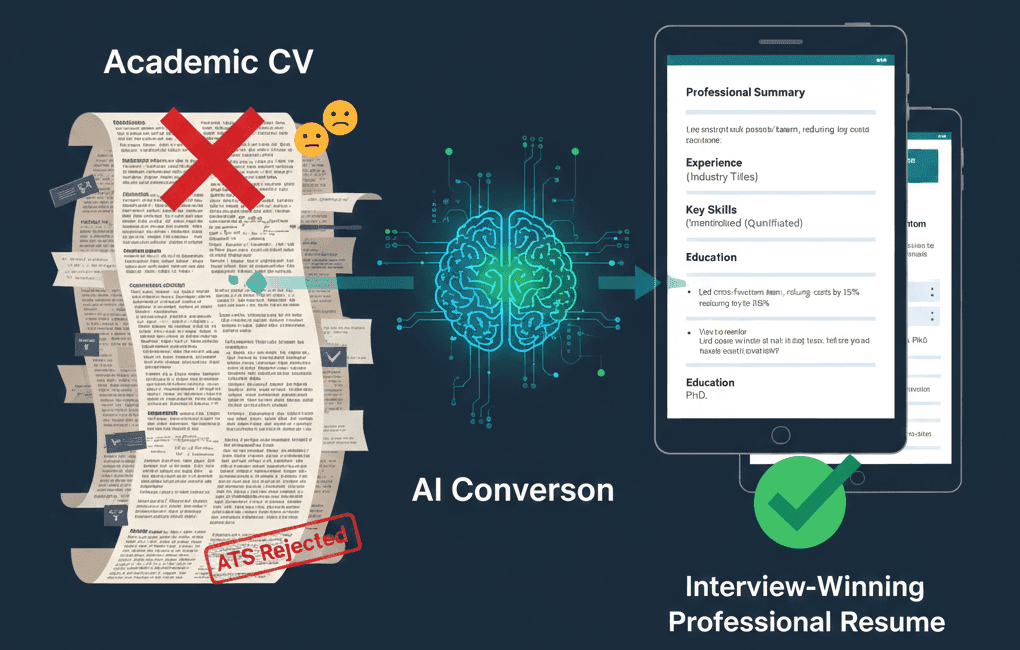
That's why tools are built to solve these problems. A great ATS Resume Builder ai takes all the guesswork out of the process, ensuring your resume is perfectly formatted and optimized to pass every ATS test.
Stop worrying about the small details and focus on getting hired. Let Firstresume.ai handle your resume and interview prep. Visit Firstresume.ai and start winning today.