Why You Don’t Need to Panic About Interview Questions
Job interviews can feel a bit overwhelming, especially when you’re unsure what kind of questions might come your way. But here’s some good news: interviews aren’t some impossible test you need to “ace” in one go. Instead, they’re an opportunity to show employers who you are, how you think, and why you’d be a great fit for their team.
Even better? You don’t have to know everything to succeed. Employers aren’t expecting perfection—they’re looking for potential. They want to understand how you think, solve problems, and communicate under unexpected scenarios.
In fact, according to LinkedIn’s Global talent trends report, 92% of companies surveyed reported that human capabilities matter as much or more than hard skills in today’s business world. This means that even if you’re new to the job market, you can stand out by showing how you approach challenges and work with others.
In this blog, we’ll dive into three common types of interview questions—behavioral, situational, and analytical—and show you how to answer them effectively. We’ll also include plenty of examples and tips so you feel prepared and confident for your next interview.
By the end, you’ll know exactly how to approach even the trickiest questions and leave a lasting impression on your interviewer—even if it’s your first ever job interview.
1. Behavioral Interview Questions: How You’ve Handled Challenges in the Past
What Are Behavioral Questions?
Behavioral questions ask you to reflect on your past experiences to show how you’ve tackled challenges, worked with others, or demonstrated key skills. They often start with prompts like:
- "Tell me about a time when…"
- "Can you give an example of…"
- "Describe a situation where…"
Why do employers ask these questions? Because your past behavior is one of the best indicators of your future performance. They want to see how you’ve handled real-life situations to assess your adaptability, teamwork, problem-solving, and leadership abilities.
How to Answer Behavioral Questions
The best way to structure your answers is by using the STAR method:
- Situation: Set the scene. What was the context or background?
- Task: What was the specific responsibility you faced?
- Action: Describe what steps you took to address the situation.
- Result: Summarize the outcome. What impact did your actions have?
Example Question and Answer
Question: "Tell me about a time when you worked on a challenging team project."
Answer:
- Situation: "In my third year of university, I joined a group project to create a marketing plan for a local business. Early on, we struggled to agree on the direction of the campaign."
- Task: "As the project leader, it was my responsibility to mediate the conflict and ensure the team stayed on track to meet our deadline."
- Action: "I organized a meeting to let everyone share their ideas and concerns. I encouraged open communication, and we voted on the best approach. Afterward, I assigned tasks based on each member’s strengths and set clear deadlines."
- Result: "The project was a success—we delivered the campaign on time, and the client implemented our ideas. Our professor gave us the highest grade in the class, and I received positive feedback from my teammates on my leadership."
Pro Tip: Practice Makes Perfect
Behavioral questions are common, so it’s worth preparing a few examples in advance. Think about times when you solved a problem, led a team, or overcame a challenge. Use the STAR method to structure your answers and practice saying them out loud to make them feel natural.
2. Situational Interview Questions: How You’d Handle Hypothetical Scenarios
What Are Situational Questions?
Situational questions are different from behavioral questions because they’re hypothetical. Instead of asking about your past, they ask how you’d handle a specific scenario. These often sound like:
- "What would you do if…"
- "How would you handle…"
- "Imagine you’re faced with…"
Why do employers ask these questions? They’re trying to assess your decision-making, problem-solving, and ability to stay calm under pressure.
How to Answer Situational Questions
When answering situational questions:
- Clarify the Scenario: Take a moment to fully understand the situation. If the question is unclear, ask for clarification.
- Explain Your Thought Process: Walk the interviewer through your reasoning step-by-step.
- Emphasize Calmness and Logic: Show that you can handle challenges with a level head and make thoughtful decisions.
Example Question and Answer
Question: "What would you do if you were assigned a task you didn’t know how to complete?"
Answer: "If I were assigned a task I wasn’t familiar with, the first thing I’d do is assess what I already know and identify any gaps in my knowledge. Then, I’d look for resources to help me learn—whether that’s reviewing documentation, seeking online tutorials, or asking a more experienced colleague for guidance. For example, during my internship, I was asked to use a new software program I’d never seen before. I spent a few hours watching tutorials and experimenting with the software, and within a day, I was able to complete the task successfully. I believe in being proactive and resourceful, so I’d approach any unfamiliar task with the same problem-solving mindset."
Pro Tip: Use Real-Life Examples
Even though situational questions are hypothetical, you can often tie your answers back to similar experiences you’ve had in the past. This makes your response more convincing and demonstrates your ability to handle challenges in real life.
Example: “In my last role as a team lead, I was responsible for..”
3. Analytical Interview Questions: Solving Complex Problems
What Are Analytical Questions?
Analytical questions are designed to test your critical thinking and problem-solving skills. They often require you to tackle a complex issue, break it down into smaller parts, and explain your reasoning. Common examples include:
- "How would you determine the best way to allocate resources for a project?"
- "What steps would you take to solve [specific technical problem]?"
- "How would you approach a situation where two departments have conflicting priorities?"
Why do employers ask these questions? They want to see how you approach complex problems, evaluate options, and communicate your thought process.
How to Answer Analytical Questions
When answering analytical questions:
- Break the Problem into Steps: Divide the issue into smaller, manageable components.
- Explain Your Reasoning: Walk the interviewer through your thought process step-by-step.
- Propose a Solution: Summarize your findings and suggest a practical course of action.
Example Question and Answer
Question: "How would you decide which features to prioritize for a new app?"
Answer: "I would take a structured approach:
- Understand User Needs: Start by analyzing user feedback, surveys, and market research to identify the features that matter most to the target audience.
- Assess Feasibility: Evaluate the technical complexity and resources required to develop each feature.
- Prioritize Based on Impact: Rank the features based on their potential to improve user experience and align with business goals.
- Collaborate with Stakeholders: Discuss the priorities with the development team and business leaders to ensure alignment. For example, during a group project in university, we had to decide which functionalities to include in a prototype app. By focusing on user feedback and feasibility, we delivered a product that exceeded expectations and earned top marks."
Pro Tip: Think Out Loud
Employers aren’t just looking for the “right” answer—they want to see how you think. Even if you’re unsure of the solution, explain your reasoning clearly and confidently.
Additional Tips for Acing Interview Questions
1. Research the Role and Company
The more you know about the company and role, the easier it will be to tailor your answers. Review the job description, explore the company’s website, and check out their social media to understand their culture and values.
2. Prepare for Common Questions
In addition to behavioral, situational, and analytical questions, prepare answers to these frequently asked questions:
- "What are your strengths and weaknesses?"
- "Why do you want to work here?"
- "Where do you see yourself in five years?"
3. Practice Active Listening
During the interview, listen carefully to the questions. If you’re unsure, don’t hesitate to ask for clarification—it shows attentiveness and confidence.
4. Tailor Your Answers
Relate your answers to the specific role and company. For example, if you’re applying for a customer service role, emphasize experiences that demonstrate empathy, problem-solving, and communication skills.
Time-Saving Tip:
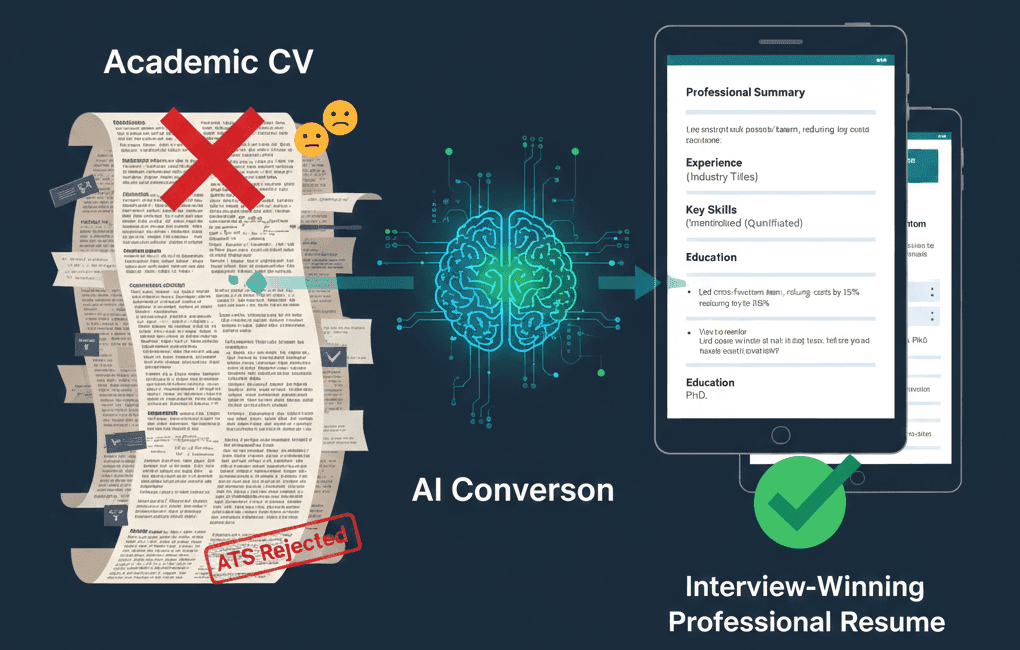
Understandably, tailoring every application and preparing for interviews can be time-consuming and overwhelming. That’s where AI tools like FirstResume come in. FirstResume uses advanced algorithms to analyze job descriptions and generate tailored CVs, cover letters, and even interview preparation resources. It ensures that your application is ATS-friendly and customized for the role, saving you hours of manual effort.
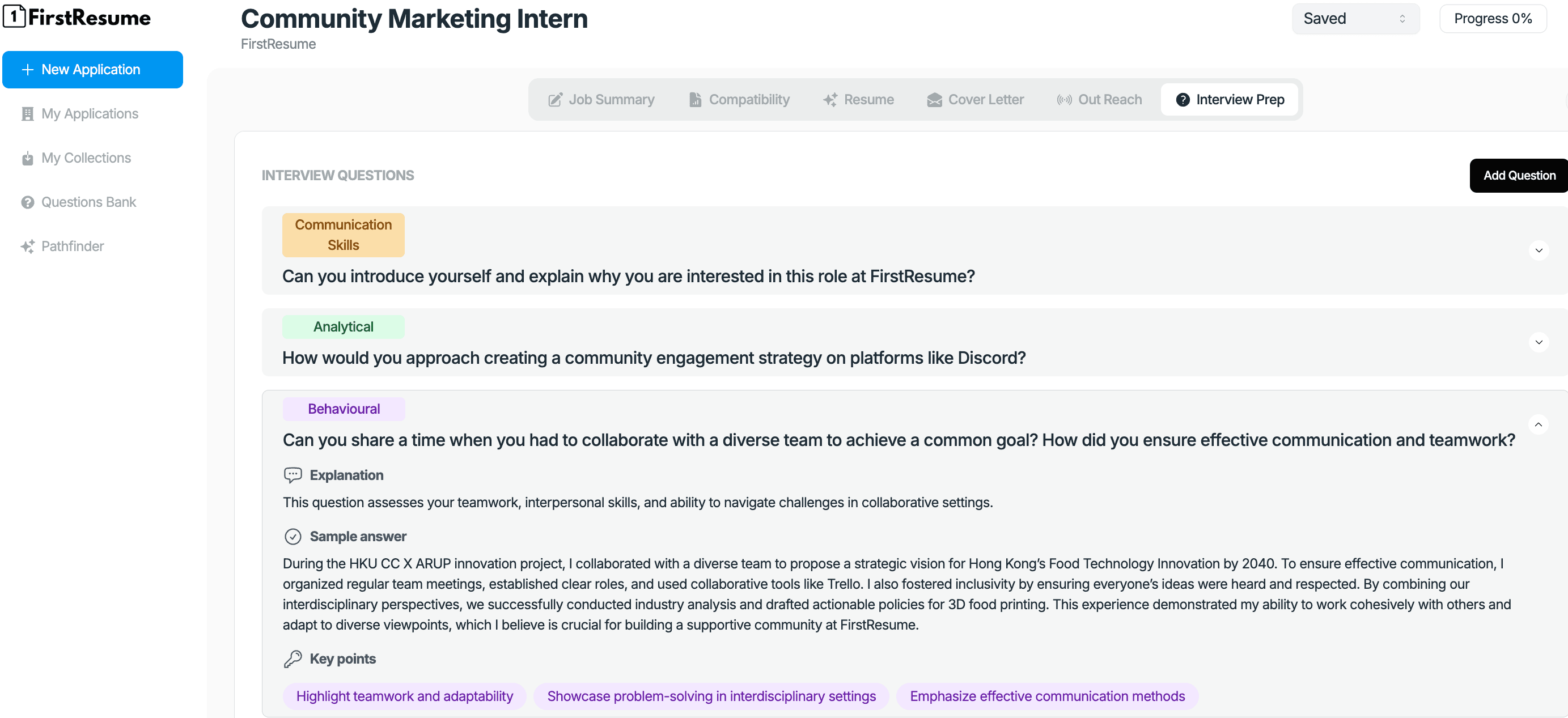
But FirstResume doesn’t stop there—it also helps you prepare for interviews with its powerful Interview Question Generator, designed to take the guesswork out of interview prep.
Why Use FirstResume?
- Tailored Application Materials: Automatically matches your skills and experiences to job descriptions, generating professional, polished CVs and cover letters in minutes.
- ATS-Friendly Optimization: Ensures your application passes ATS filters and grabs recruiters’ attention.
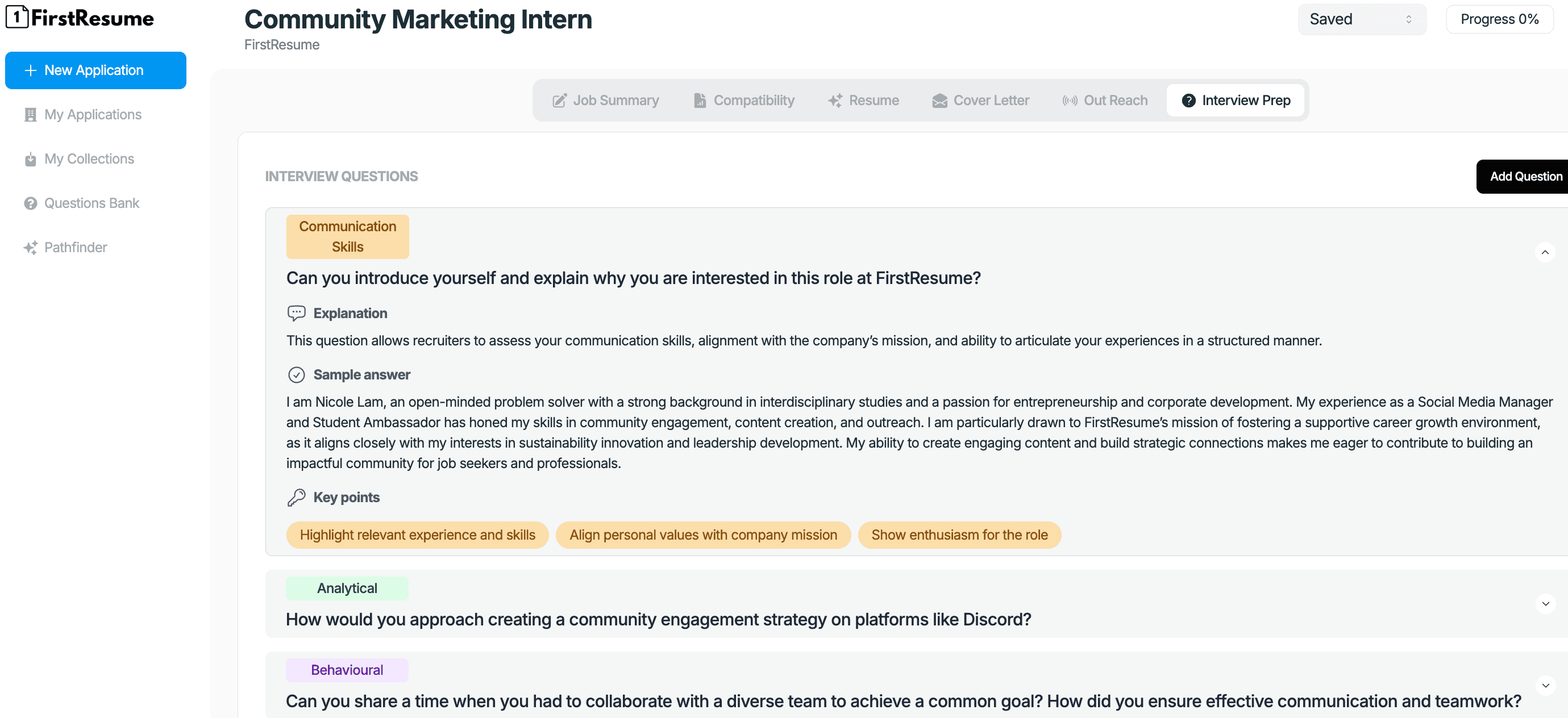
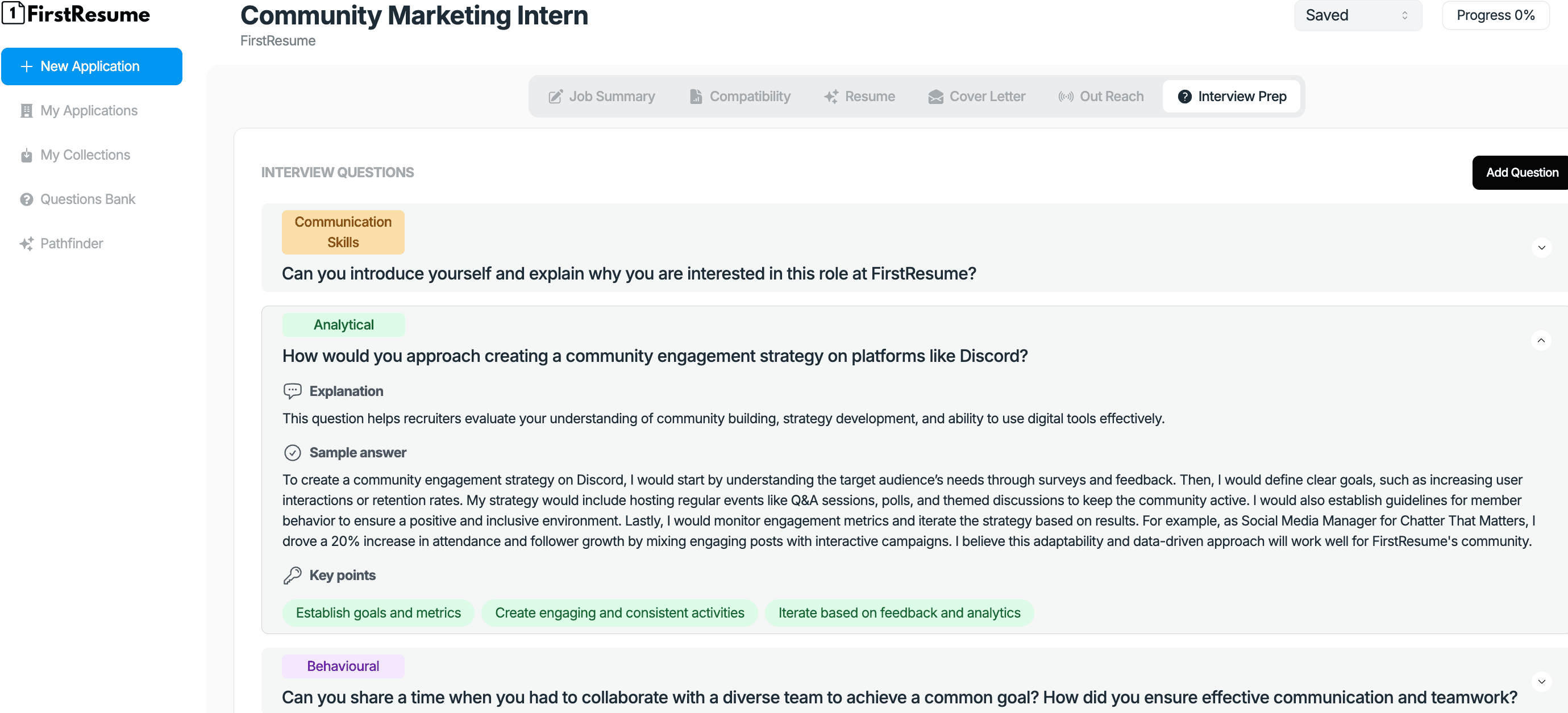
- Interview Question Generator: Creates mock interview questions tailored to the role. It includes default categories like Communication Skills, Analytical, Behavioral, and Situational questions.
- Customizable Questions: You can add your own custom questions or let the AI generate more based on your chosen categories.
Also check out FirstResume’s Interview Question Bank, which features a curated list of the latest and most popular interview questions from top companies like Microsoft, Goldman Sachs, and more. It’s perfect for you looking to save time while preparing strategically.
Here’s what makes it so effective:
- Diverse Categories: Questions are grouped into types like behavioral, analytical, situational, communication skills, and technical, so you can target exactly what you need to practice.
- Difficulty Levels: Each question is labeled as Easy, Medium, or Hard, helping you work through challenges at your own pace and match the preparation to your skill level.
- Industry Relevance: The questions are tailored to reflect trends across different industries, ensuring you’re ready for what’s most likely to come up.
With FirstResume’s AI Interview Assistant and real-life Interview Question Bank, you can skip the guesswork and focus on refining your answers to real-world questions. By using tools like FirstResume, you can focus on what matters—preparing for interviews and building your skills—while ensuring your applications are flawless. It offers a free version, so give it a try!
5. Stay Positive
Last but not least, even when discussing challenges or mistakes, focus on what you learned and how you grew from the experience. Employers love seeing resilience and a growth mindset.
Preparation Builds Confidence
Job interviews don’t have to feel like a guessing game. By understanding the different types of questions—behavioral, situational, and analytical—you can prepare thoughtful, well-structured answers that highlight your strengths and potential.
Remember: employers aren’t looking for perfection—they’re looking for someone who shows promise, works well under pressure, and communicates effectively.
Start preparing today by practicing the STAR method, preparing examples, reviewing common questions, and refining your responses. With the right preparation, you’ll walk into your next interview ready to impress.
Take action today—practice your response using the tips in this blog. Better yet, use FirstResume’s AI-powered tools to prepare for your interview based on jobs you’re applying for. With the right preparation, you’ll be ready to ace any interview question that comes your way.
Good luck—you’ve got this!