You're Great at Your Work. But Why Do Job Interviews Feel Impossible?
Have you ever walked out of a job interview and thought, "That was completely different from what I do every day"?
Maybe you're a talented software developer who builds amazing products, but you struggle with a "whiteboard" coding question. Or maybe you're a marketing professional who runs successful campaigns, but you freeze up when asked a tricky situational question.
You're not alone.
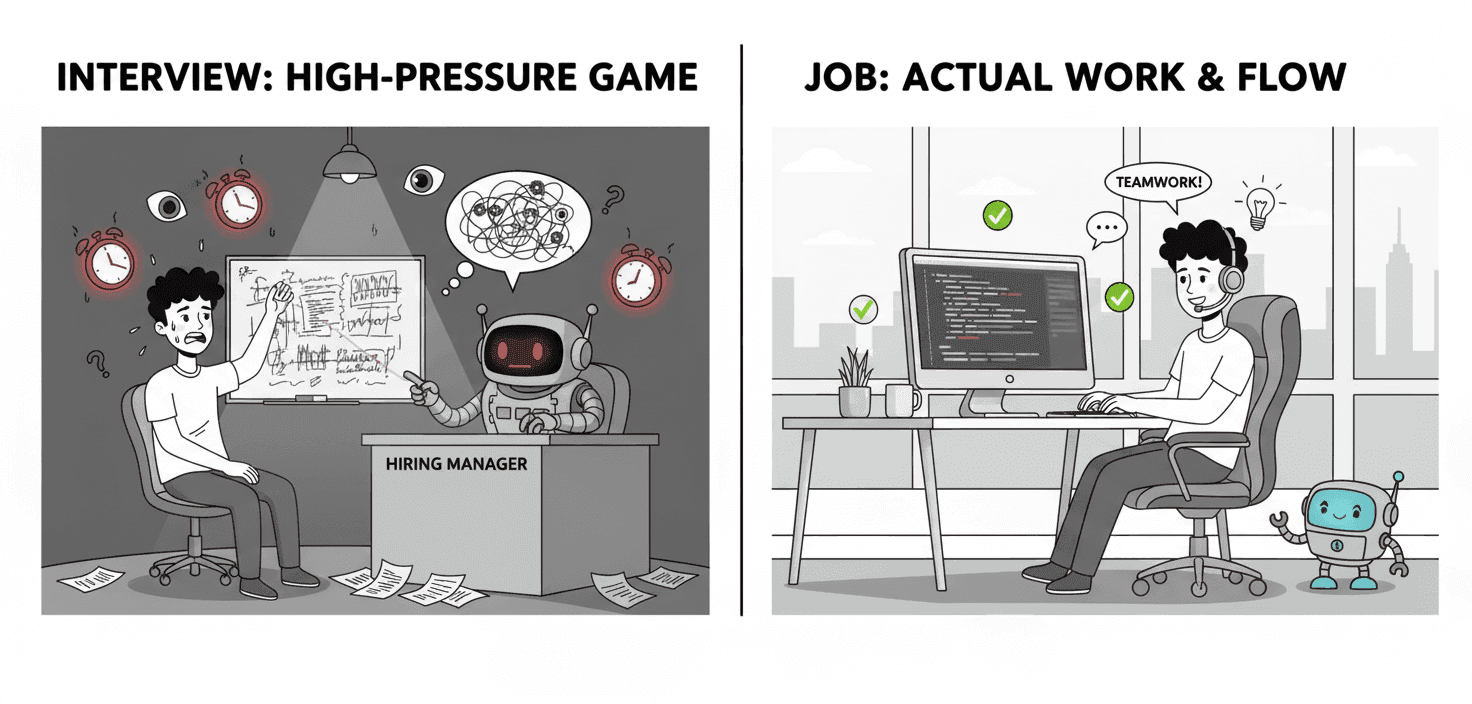
The feeling that an interview is a bizarre, high-pressure test that has nothing to do with the actual job is incredibly common. It’s like being a world-class chef who has to pass a cooking test by only using three random ingredients and a blowtorch.
Why does this happen?
The truth is, interviews aren't designed to test your everyday work skills. They are a special game with its own rules. Understanding these rules is the first step to winning. Let’s break down the reasons why interviews feel so much harder than the job itself.
1. The Skill Gap: Real Work vs. Interview "Tricks"
The number one reason for this feeling is that interviews test a very specific, and often unnatural, set of skills. In many fields, especially in tech, interviews focus on abstract problem-solving, data structures, and algorithms. This is what people call “whiteboard skills.”
Think about it. In your actual job, how often do you have to write code on a whiteboard with no internet access? Never, right? You spend your days debugging, collaborating with a team, using tools like Google to research solutions, and shipping features. These are the skills that make you great at your job.
But in an interview, the goal is different. They want to see how you think under pressure. They want to see if you can break down a big, complex problem into smaller parts. They believe that if you can solve a hard, abstract problem on a whiteboard, you can handle the everyday challenges of the job. It’s a filtering system, not a true test of your worth.
This can lead to a lot of talented people feeling inadequate. It's the classic case of having Imposter Syndrome, where you feel like a fraud because you’re not great at this one specific, high-pressure task, even though you are a fantastic professional in real life.
2. Time Pressure and Memory vs. Research and Collaboration
In your day-to-day job, you have time. You can work with teammates to solve a problem. You can spend an hour or two researching a new topic. You can use search engines, your notes, or documentation to find the information you need.
An interview is the opposite. It is a high-stakes, high-pressure environment. You are put on the spot and expected to produce a solution quickly, often relying solely on what you can recall from memory. This is completely unnatural.
Your brain is not a database. It's a processor. In the real world, you process information by finding it, using it, and collaborating with others. In an interview, you're expected to have everything pre-loaded in your head. This pressure is a major reason why interviews feel so much harder than the actual job.
3. The "Performance" Aspect
When you’re working, you're in a comfortable routine. You have your coffee, your desk, and your daily workflow. You are focused on the task, not on how you are perceived.
In an interview, you are performing. You are under constant scrutiny from a stranger who is evaluating your every move. You have to articulate your thought process out loud while you are thinking. This is an entirely different kind of skill, more like public speaking or acting than your regular work. This performance anxiety can make even the simplest problems feel impossible.
This is why some people who are quiet and brilliant workers struggle in interviews, while some people who are great at talking get the job. It doesn’t mean the first person is a bad worker, it just means they are not as good at the interview "performance."
4. The Stakes Are Incredibly High
On a Tuesday at 2 PM, if you make a mistake at work, it’s not the end of the world. You learn from it, you fix it, and you move on.
In an interview, one small mistake can cost you the entire opportunity. This is a lot of pressure to handle, and it makes you more likely to overthink and make a silly mistake. The stakes feel incredibly high, and this emotional weight makes the interview experience a thousand times more difficult than just doing the job.
It’s like the difference between running a practice lap and running the final race for a championship. The physical act is the same, but the pressure is completely different.
The Bottom Line: Prepare for the Game, Not Just the Job
So, if you’re a great worker but you struggle with interviews, you're not a fraud. You're just playing a different game.
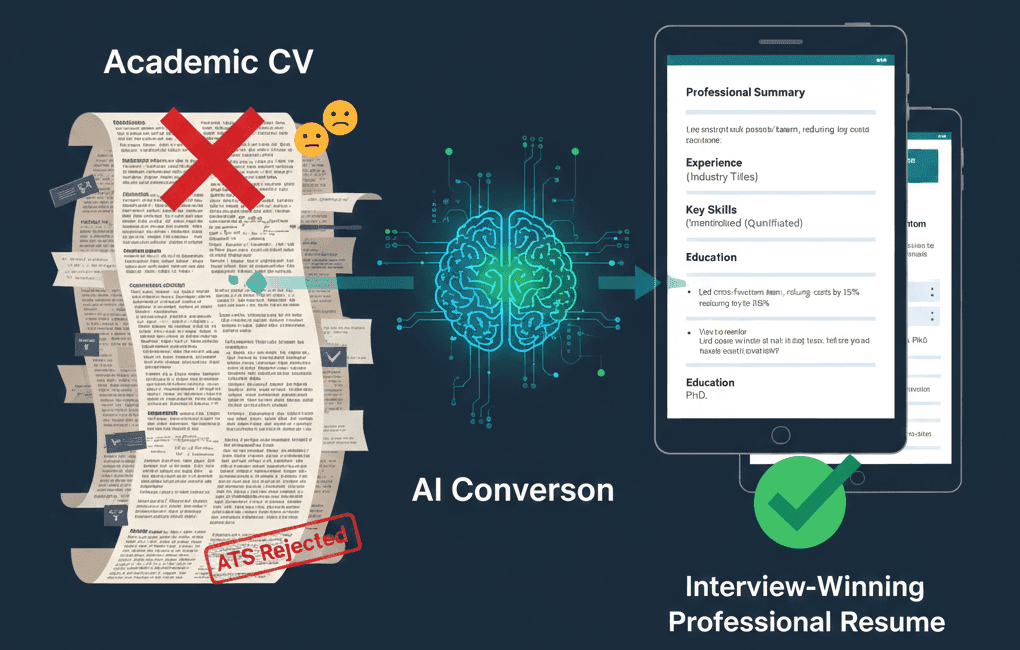
Don’t let these challenges stop you. The key is to prepare for the interview game itself. Practice those "whiteboard" questions. Do mock interviews. Get your resume format and cover letter perfect, as those are the tools that get you in the door.
A great resume builder can help you with things like finding the best resume templates free, making a professional resume format, and even creating an amazing cover letter template. This frees you up to focus on the hardest part of the process the interview itself.
Remember, your true skills will shine once you're hired. The interview is just a temporary hurdle. Treat it like a skill you have to practice, just like any other.
Stop worrying about the game and start winning it. Firstresume.ai doesn't just help you with your resume, it also guides you on what questions to expect in your interview based on your job role, so you can walk in with confidence.
Check out Firstresume.ai to create your perfect resume and land the interview you deserve.